In this blog I am going to discuss why your inspiration photos aren’t working out for you, and show you how to break down your inspiration photos and use them as a guide rather than copy it completely.
1. The “Model Effect”
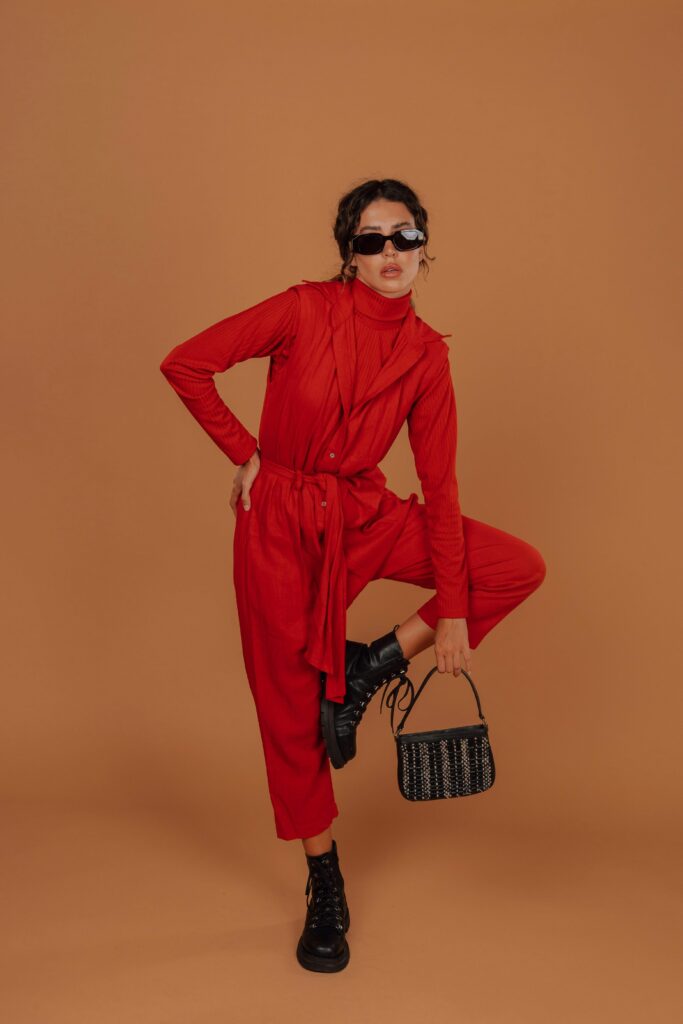
When looking at photos online or in magazines, people can often get drawn to the model rather than the hairstyle itself. Clients are often responding to the person, not just the haircut or colour. It might be that they like the angle the model is posing in, the lighting, or even the overall look and feel of the image. The photo could have been taken in bright sunshine, under professional studio lighting, or behind a ring light. Sometimes, you might simply like the face the hair is on.
Editorial images often use additional hair pieces or extensions to make the hair appear fuller, thicker, or more dimensional. Sometimes the colours shown are unrealistic for the average client sitting in the salon chair.
When thinking about what hairstyle to go for next, you have to consider your own face shape, hair texture, and even your lifestyle.
Key Insight
A haircut can enhance your features, but it cannot recreate someone else’s:
- Bone structure
- Hair density
- Styling ability
- Face proportions
- Hair texture
2. What You’re Actually Responding to in Inspiration Photos
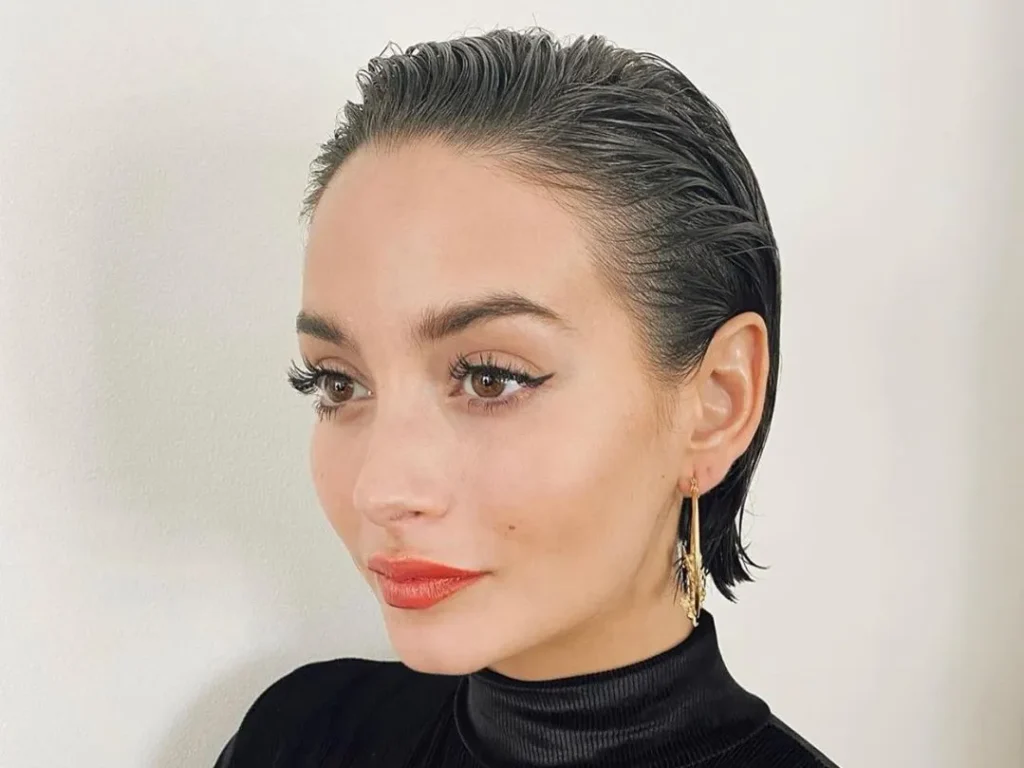
When a client shows me an inspiration photo, I like to break it down and understand what they actually like about it. Sometimes a client might show a photo and only like one specific element of it. That’s why it’s important to analyse the image properly to make sure we get it right the first time and set realistic expectations.
Not only do I break down the photo itself, but I also consider my client’s features and whether the look will suit them.
Bone Structure
Jawline – Is your jawline square, round, or triangular?
Cheekbones – Do you have high or low cheekbones?
Neck Length – Do you have a short, long, or wider neck?
Forehead Proportions – Is your forehead angled, narrow, broad, rounded, prominent, or flatter in appearance?
These are all important things to consider because the person in the photo may have naturally different features, or the image may even have been edited to make those features appear more flattering. That could be one of the reasons you’re drawn to the photo in the first place.
It’s also worth asking yourself whether you’re comfortable exposing or emphasising certain features.
Hair Density & Texture
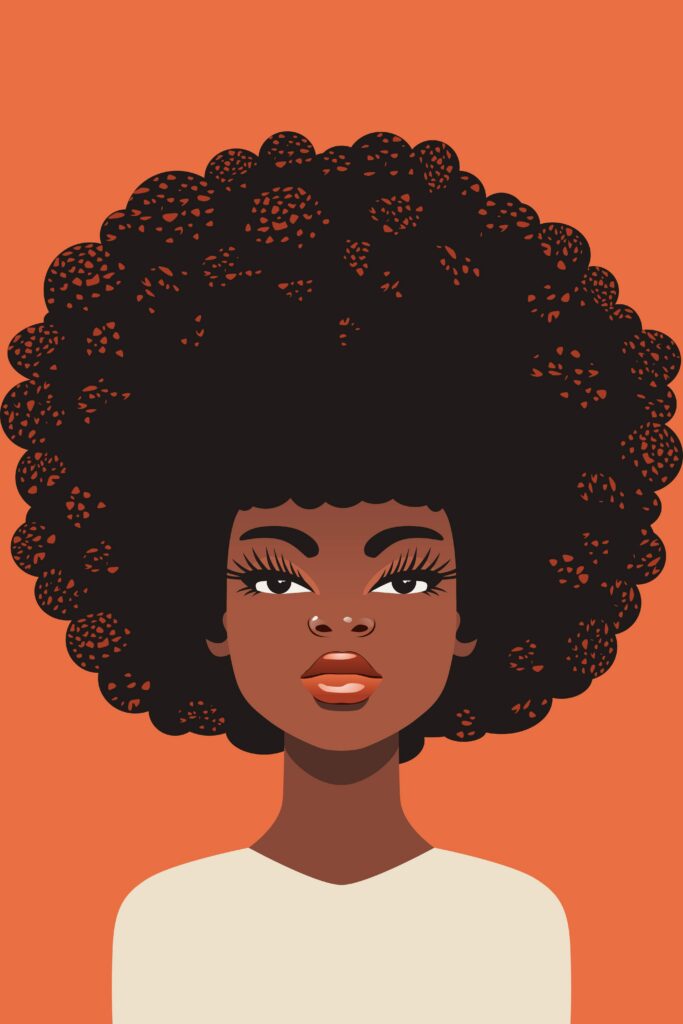
Sometimes it’s easy to get carried away looking at photos and forget about your own hair type, growth patterns, and how your hair reacts to certain styles. It’s important to look at inspiration photos that have a similar hair type to your own.
If you have naturally curly or frizzy hair but are looking at photos of someone with naturally straight, smooth hair, the outcome is going to be very different.
Extensions – Some people use extensions to make their hair appear thicker, especially around the front hairline.
Naturally Thick Hair – If you have thick hair and are looking at one-length hairstyles, you may find the result appears triangular or too heavy. In these cases, layers are often needed.
Styling Preparation – Do you enjoy styling your hair? Some hairstyles require daily styling to achieve the desired look.
Naturally Straight vs Textured Hair – A great example of this is the wolf cut or shag haircut. If you have very straight hair, these styles often require a lot of heat styling with curling tongs or straighteners to create texture and movement. Without styling, they can sometimes appear disconnected or unblended. On naturally textured or curly hair, however, these cuts can enhance the natural movement and create a much softer result.
Styling & Photography
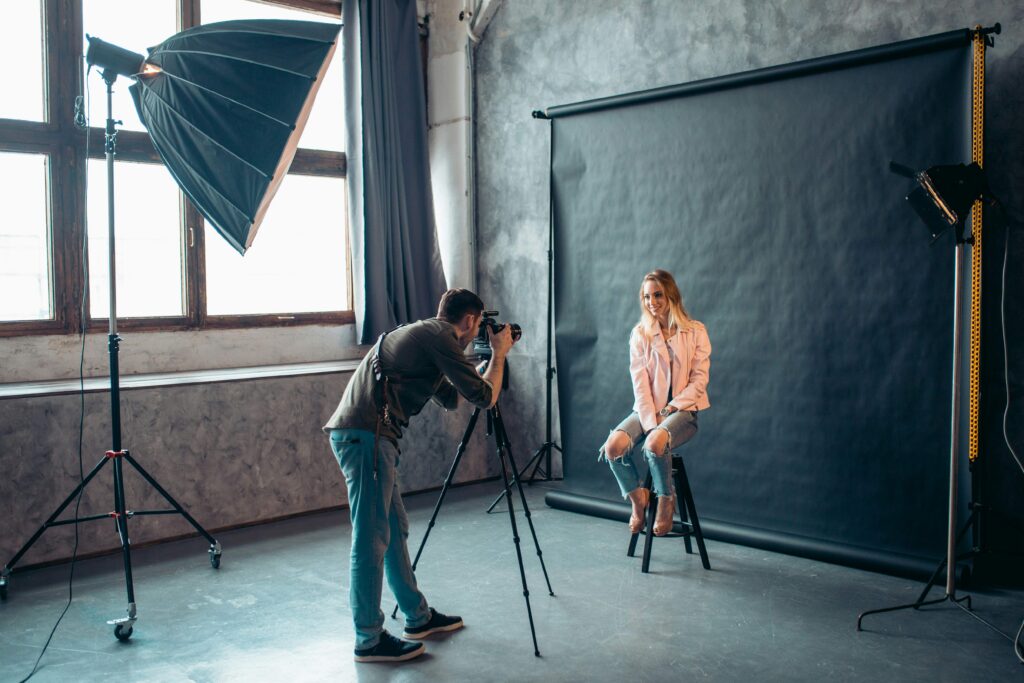
Sometimes the photos we see have an entire team behind them, including hair stylists, makeup artists, photographers, and editors.
Products – Are you willing to invest in products to recreate the look you love?
Lighting – Lighting plays a huge role in how hair appears. Ring lights can make colours look brighter and more vibrant, but day-to-day the colour may appear softer and more toned down.
Angles – You’ve asked for that bob haircut, but when you see it on yourself you’re not keen on your side profile. You may wonder why the model looks better from the side. This often comes down to face shape and understanding which features you want to enhance.
Editing – Photos are often edited. A model’s nose may appear smaller, their skin smoother, or their hair more polished than it does in real life.
Retouching & Maintenance – Are you willing to commit to the maintenance required for your new look?
Fashion & Makeup
A simple bob on a styled model can appear dramatically different from the same haircut on a normal workday.
Many people assume shorter hair is easier to manage, but that’s not always the case. Shorter styles often require more styling. If you’re someone who doesn’t want to think about their hair every morning, a shorter style may not be the best option for you.
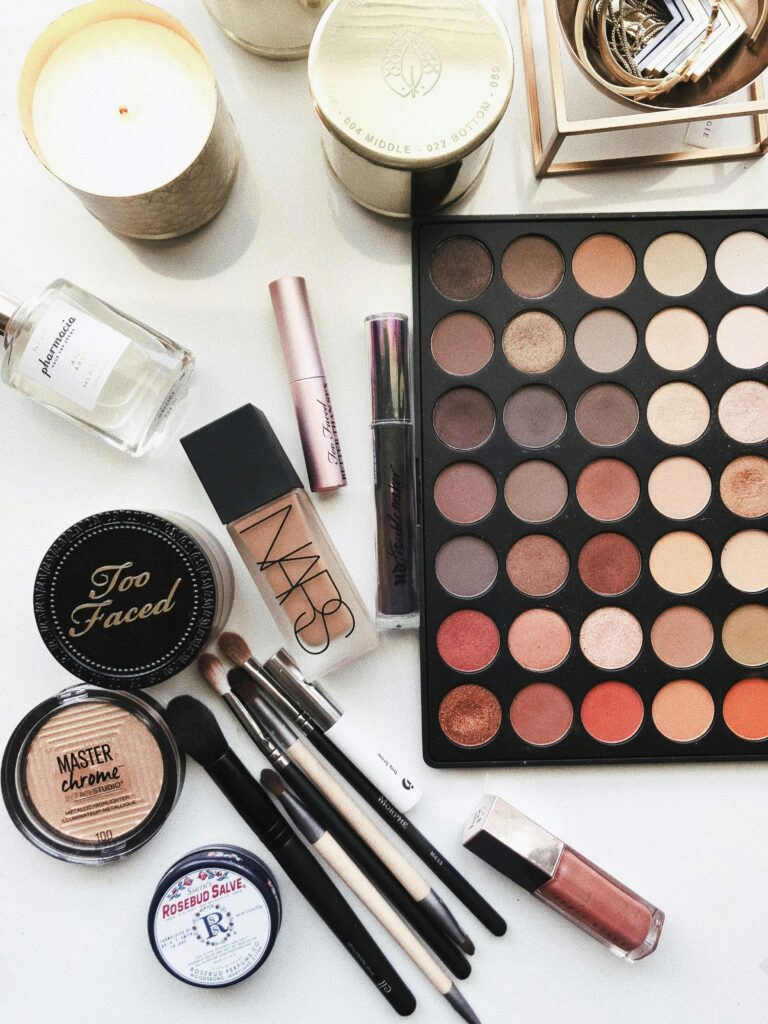
This is where photos of models can be misleading. They often have professional makeup, styling, and clothing that complete the overall look.
With bob haircuts, there are also several lengths to consider:
- Collarbone-Length Bob – A softer option that doesn’t emphasise facial features as much and is generally easier to maintain.
- Jaw-Length Bob – This starts to highlight features such as the neck, jawline, and chin, often requiring more styling and maintenance.
- Cheekbone-Length Bob – A stronger, more dramatic look that really emphasises your facial features and may leave some people feeling they need to wear more makeup to balance the look.

3. The Biggest Consultation Mistakes I See
It’s not always the client who gets things wrong. Stylists can make mistakes too.
For example, promising a result in one appointment when it may realistically take two or three sessions, not considering hair texture and growth patterns, overlooking hairlines and cowlicks, ignoring previous chemical history, or failing to explain how a style will look from every angle.
Here are some common mistakes clients make:
- Bringing heavily filtered photos.
- Only showing one angle and not the back.
- Looking at hairstyles on completely different hair types.
- Choosing styles that require a lot of styling without considering their lifestyle.
- Ignoring maintenance requirements.
- Choosing looks purely based on trends, such as wanting copper hair for winter and then wanting to be blonde again by summer.
4. What Makes a Great Inspiration Photo
It can feel nerve-racking coming into the salon and trying to explain exactly what you want, so photos are a fantastic tool. They help your stylist understand your vision and what you’re hoping to achieve.
Photos should be used as inspiration rather than something to copy exactly.
Pictures you don’t like can be just as helpful because they show your stylist what to avoid.
If there’s an influencer or celebrity whose hair you love, try looking at their Instagram or TikTok stories as well. These often show a more realistic view of their hair day-to-day rather than a polished photoshoot image. Screenshot those too and bring them along to your consultation.
I Recommend Looking For:
- Multiple angles
- Similar hair density
- Similar hair texture
- Similar face shape
- Realistic styling
- Photos showing movement
- Day-to-day hair rather than editorial-only images
5. What I Look at During a Consultation
This is where the stylist comes into play.
One of the most important parts of a consultation is being realistic and setting expectations accordingly. If a look will take several months or even a year to achieve, it’s important to communicate that from the beginning so nobody leaves disappointed.
Sometimes a client may disagree with what I’m saying and choose to get a second opinion elsewhere, and that’s absolutely fine. I’d much rather be honest than promise something I can’t deliver.
The condition of the hair is also a huge factor. You don’t want to push the hair beyond what it can safely handle.
Some of the things I consider during a consultation include:
- Hair density
- Growth patterns
- Cowlicks
- Styling habits
- Lifestyle
- Maintenance tolerance
- Office versus gym lifestyle
- Previous chemical history
- Neckline
- Head shape
- Daily routine
6. The Better Goal: “Inspired By” Rather Than “Copied Exactly”
Using photos you love as inspiration is a great way to achieve a look that suits your hair type, lifestyle, and features.
Inspiration photos should be used as a guide rather than a blueprint. The best hairstyles are tailored to the individual, which is why they often last longer and feel easier to wear.
The aim isn’t to recreate someone else—it’s to create the best version of that haircut for you.
7. Real-Life Example
My client had grown his hair out from short back and sides and realised he had tight curly hair and couldn’t maintain it but still wanted something on the longer/mid length side. This is the inspiration photo:
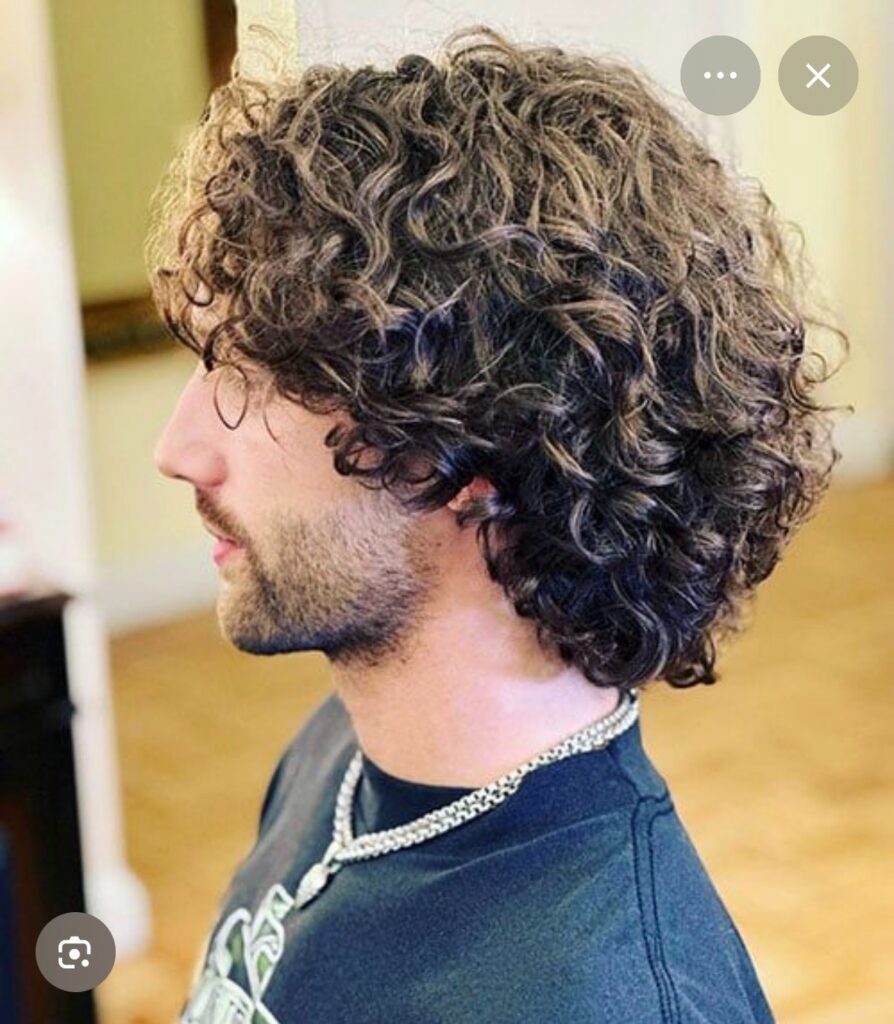
As we can see the gents’ hair is a looser curl more curly towards the ends. Here is my client: tighter curls from the roots to ends with a lot more spring in it. So we agreed on creating a rounder shape that follows the head. This is a similar shape to the inspiration photo but not exactly the same.

Here is another example: same haircut on different texture of hair and colour. Inspiration for both of these haircuts are bixie grown out pixie styles
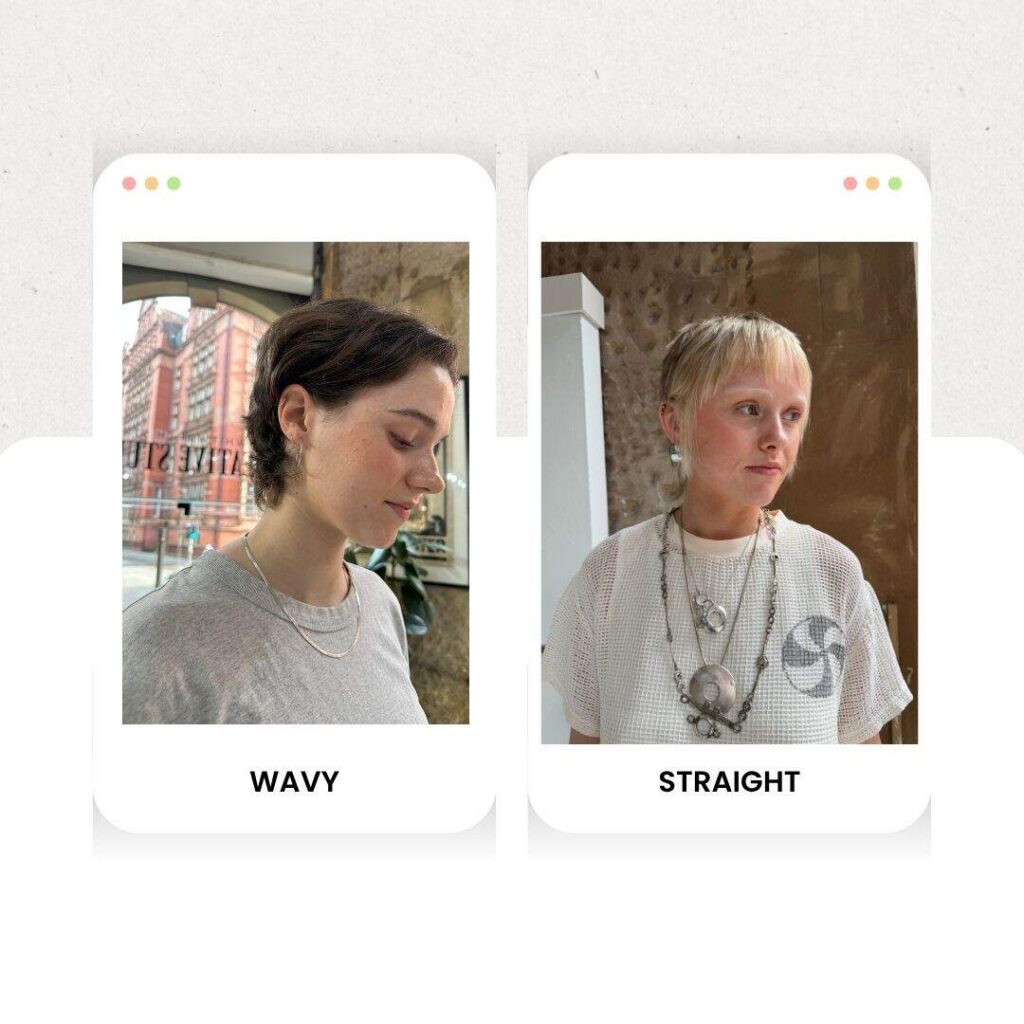
Same haircut- but different textures so both haircuts are collar bone length with a square layer.
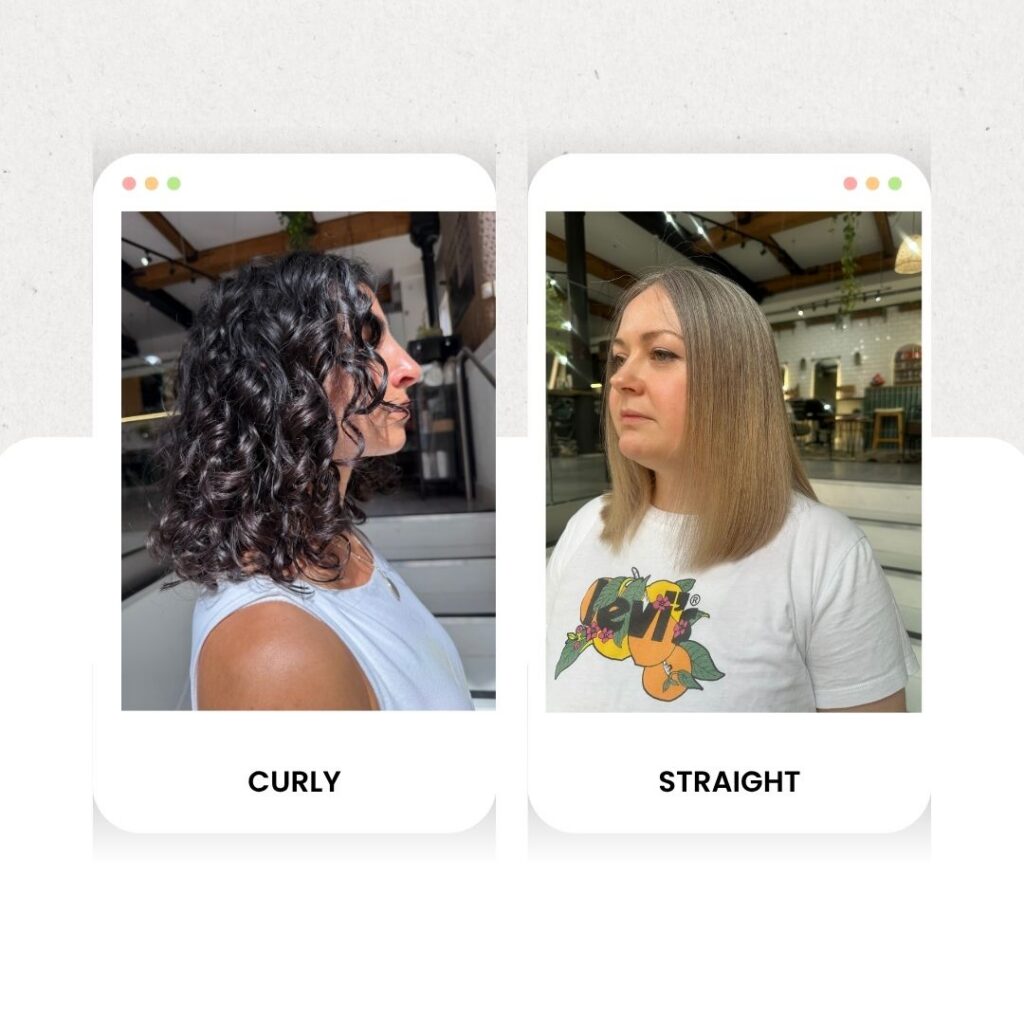
I Hope this blog helps you understand more about inspiration photos and gives you the confidence to ask what you want from your hair appointment book your next hair consultation in Manchester here
About the author:
I’m Rebecca, a freelance hair stylist in Manchester with 12 years of experience working with colour, highlights, cuts and everyday haircare. I do not sell products in the salon, so my advice is based on what I genuinely find useful for clients, not what I am trying to push.